Species 1
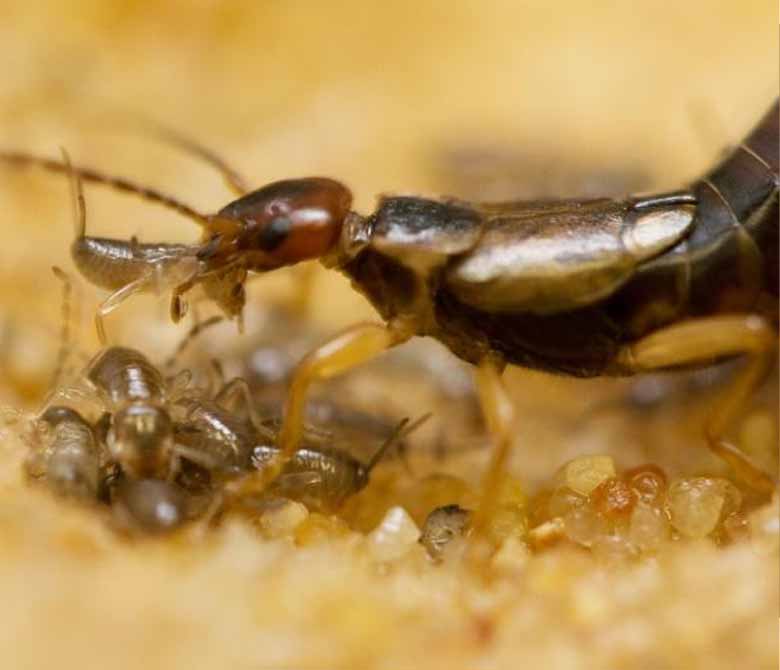
Earwigs
- Mostly nocturnal and hide in moist locations such as under stones and mulch.
- Feed on live or dead plants and insects.
- Attracted to lights.
- Move into homes to find food or shelter from outdoor elements.
- Use their pinchers for defense and for sparring with rival earwigs.
Species 2
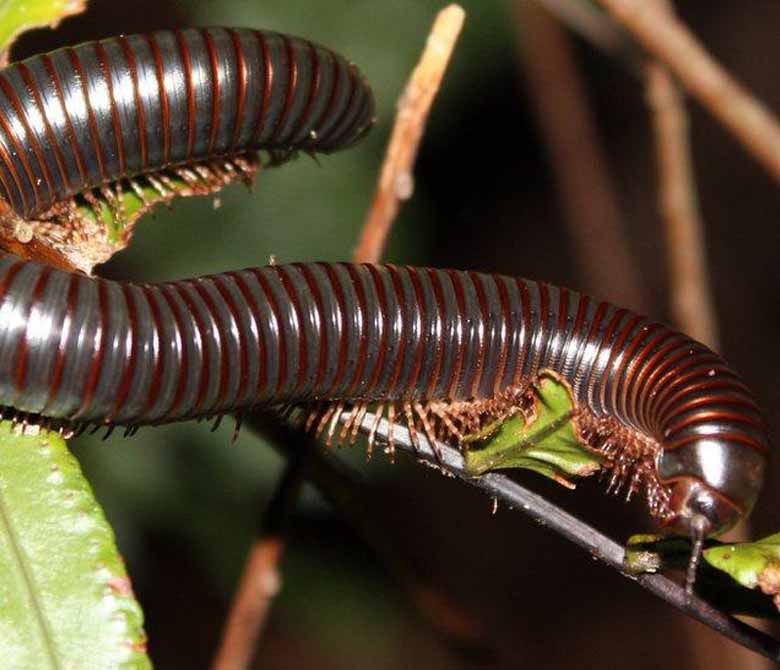
Millipedes
- Adults about 1/16 – 4½" long.
- Cylindrical and worm-like, sometimes slightly flattened.
- Blackish or brownish; some red, orange or with mottled patterns.
- One pair of short, 7-segmented antennae.
- Cluster of simple eyes on each side of the head.
- Most body segments bear two pairs of legs.
Species 3
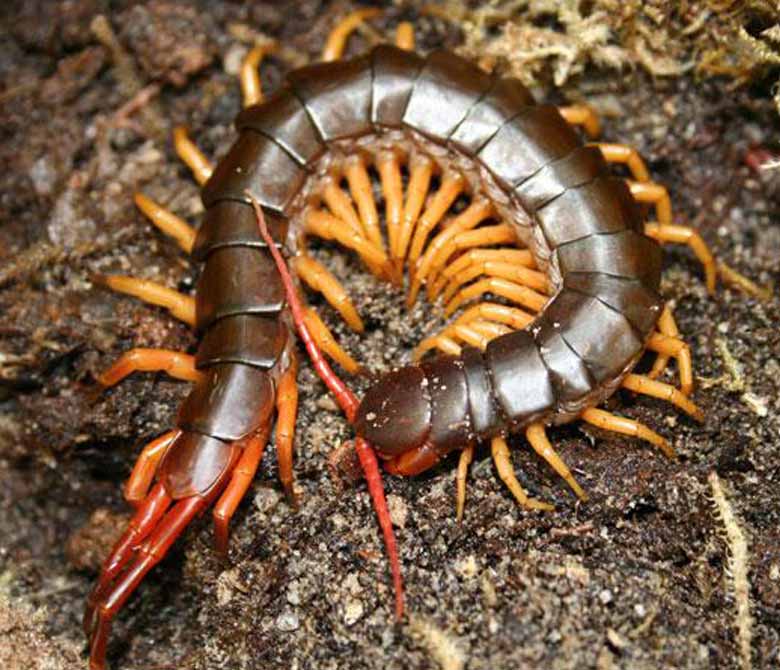
Centipedes
- Adults about 1/8 – 6" long; elongated, flattened and worm-like.
- Yellowish to dark brown, sometimes with darker stripes or markings.
- One pair of antennae.
- Flat, segmented bodies with one pair of legs per segment.
- 14-50 segmented.
- Some with compound eyes; most with a cluster of simple eyes per side, or no eyes.
- Total leg pairs number 15-177.
Species 4
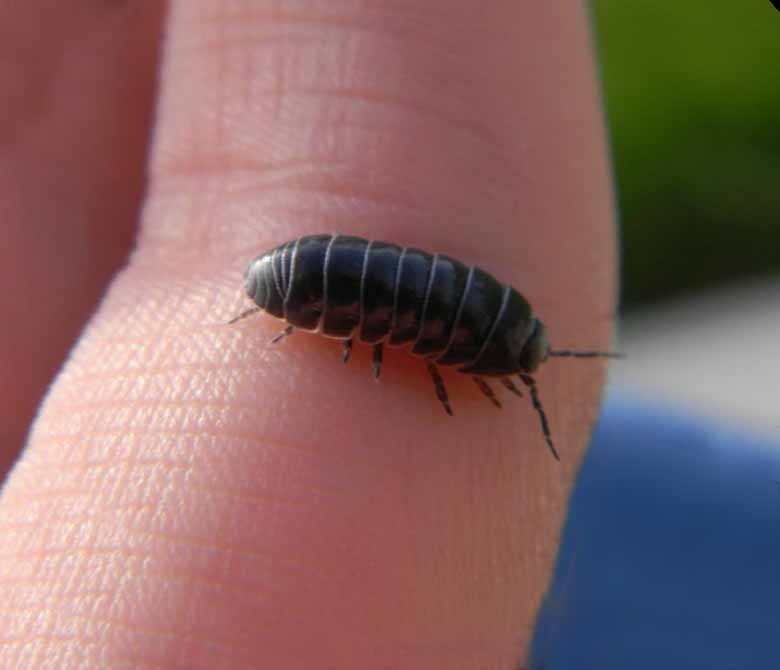
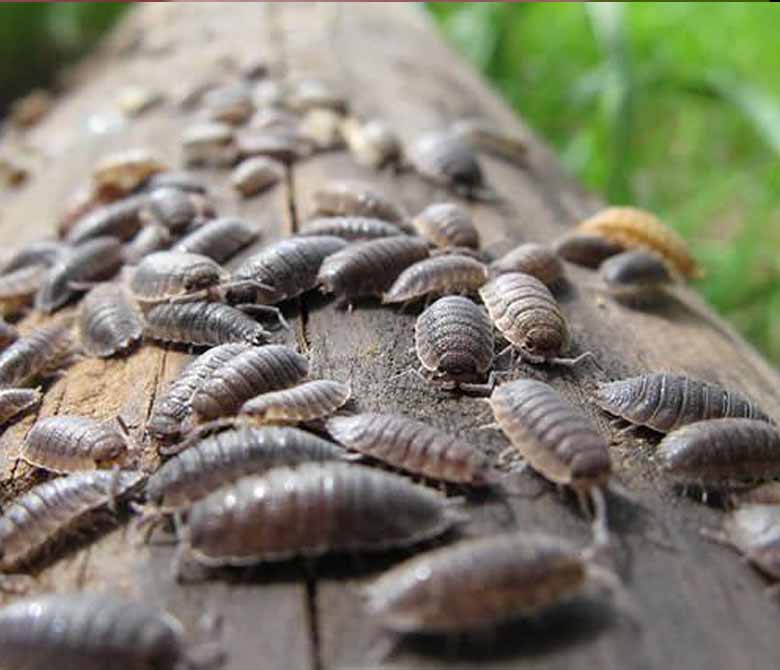
Pill Bugs
- Adults about 5/8" long.
- Raised above but flat or hollow beneath.
- Slate gray.
- 7 pairs of similar legs.
- 2 pairs of antennae (one tiny, the other visible).
- Roll up into a tight ball when disturbed.
Species 5
Sow Bugs
- Crustaceans and arthropods, not insects.
- Adults about 5/8" long.
- Raised above but flat or hollow beneath.
- Dark to slate gray.
- 7 pairs of similar legs.
- 2 pairs of antennae (one tiny, the other readily visible).
- Roll up into a loose ball when disturbed.
Species 6
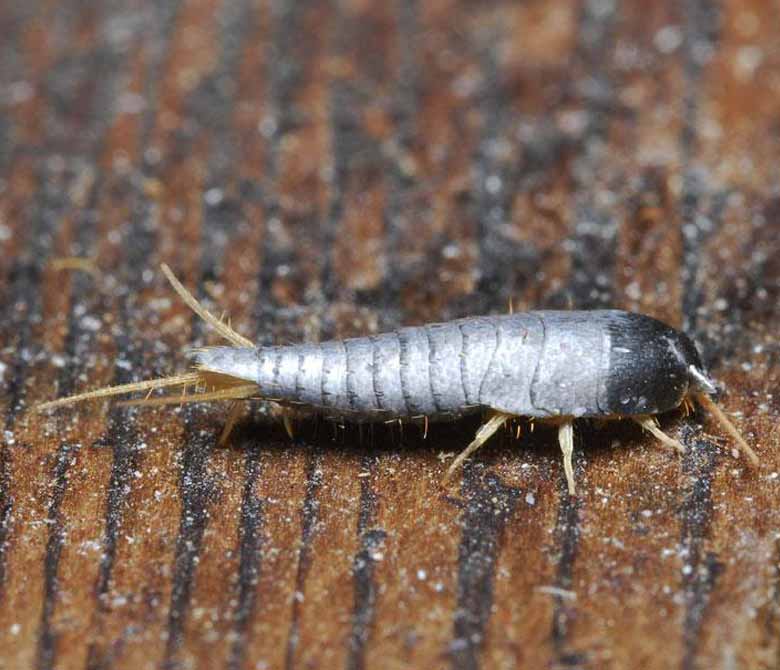
Silverfish
- Adult body length about ¾" long.
- Wingless with a flattened body.
- Teardrop / carrot / fish-like shape from head to rear.
- Covered with scales.
- Silvery to gunmetal in color.
- Long, thread-like antennae.
- Posterior end of the abdomen with 3 long bristle-like appendages.
Species 7
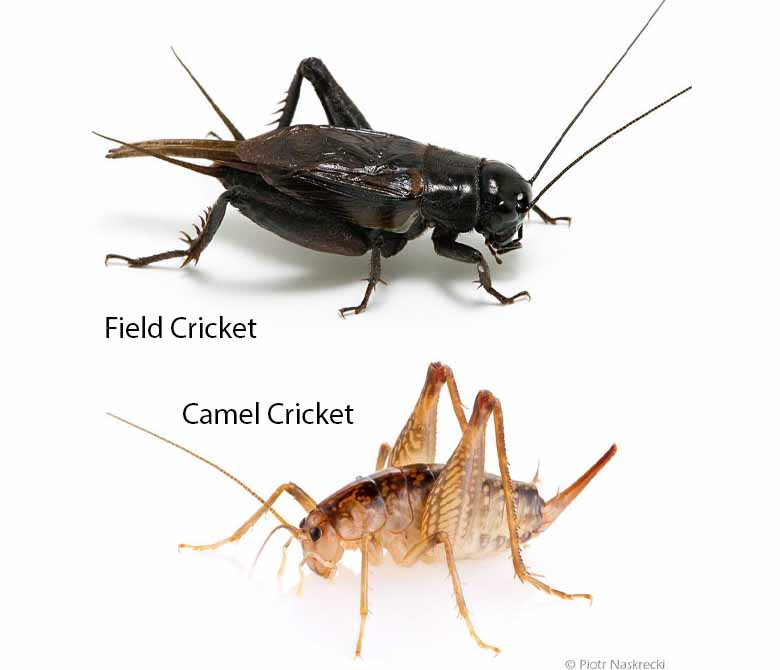
Crickets
- ½" to 1¼" in size.
- Two basic types of structure-invading crickets:
- Camel / Cave / Stone Crickets
- Field Crickets
- Many colors but most common are brown, tan and green.
- 1-3 generations per year.
- Found around home wells, drainage culverts/pipes, A/C units, garages, etc.
- Field crickets make a chirping sound with their hind legs.
- Camel crickets are usually found in cool, moist, dark areas — crawl spaces and finished basements.
Species 8
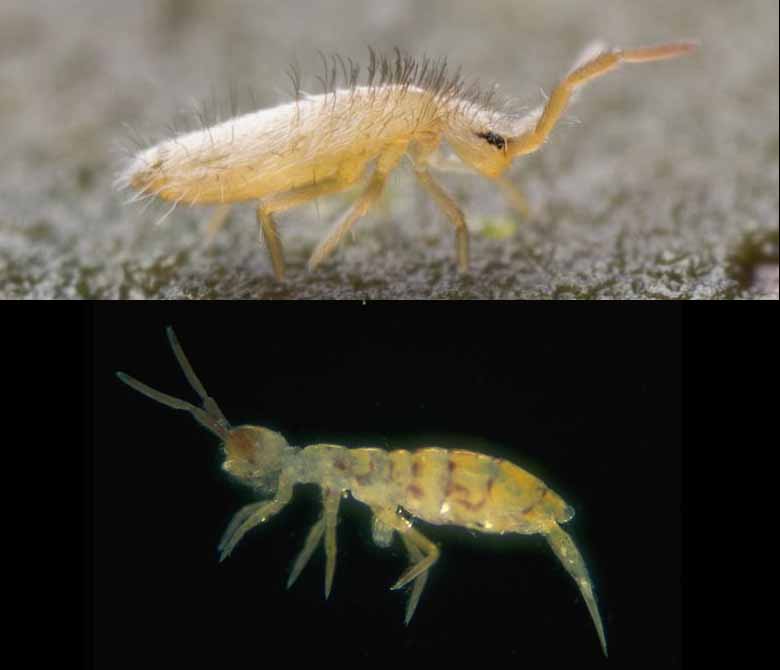
Springtails
- Adults are 1/32 – 1/8" long.
- Soft, wingless with an elongated or globe-shaped body.
- Whitish or gray, sometimes purple, blue, green, yellow or orange.
- Head with chewing mouthparts; small eyes.
- Short antennae, 4-6 segmented.
- Abdomen 5-6 segmented; forked, with a small tubular structure.
- Legs slender, small and unmodified.
Species 9
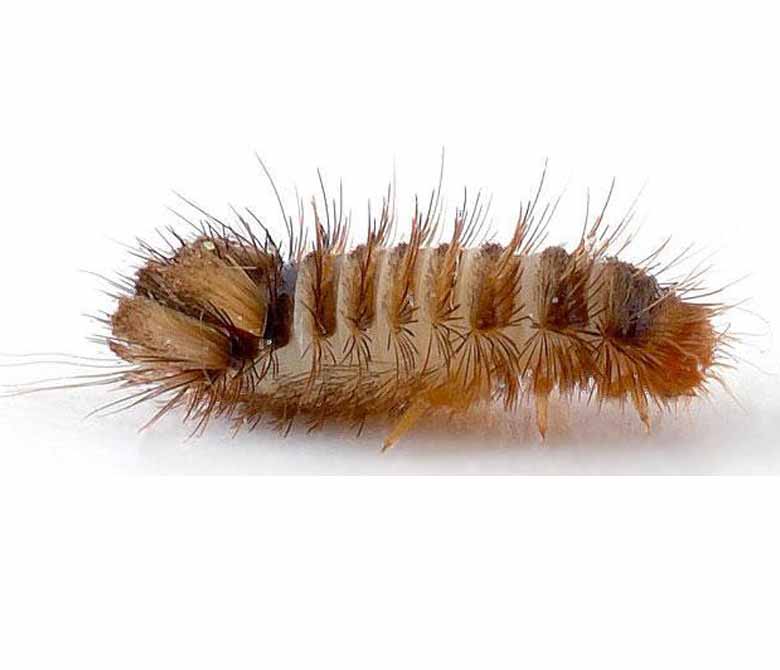
Carpet Beetles
- 1/32 – ½" in length.
- Color varies — shades of brown, white and black.
- Chewing mouthparts.
- Antennae short, with a 3-segmented compact club.
- Body elongate-oval to almost circular, covered with scales or hair.
- Also known as "fabric pests" — they have the ability to digest keratin found in wool, hair, fur, feathers, horns and hoofs.
- Tend to infest carpets, blankets and coats.
- Prefer to feed in dark, undisturbed areas.
- On dead insects, they typically feed from within; the accumulation of fine powder beneath the specimen is usually the only indication of their presence.
Species 10
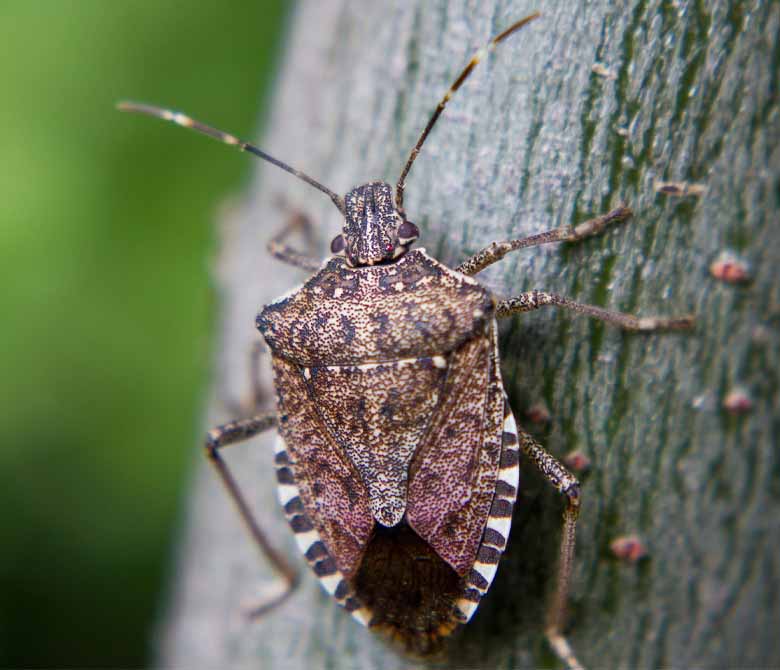
Brown Marmorated Stink Bug
- 12-17 mm long.
- Shield-shaped body.
- Brown with light and dark bands on the antennae and wings.
- Named for the unpleasant odor they produce when threatened.
- Feed on apples, peaches, blackberries, tomatoes, corn, soybeans, lima beans and green peppers.
- Move inside the home through cracks and other openings; spend the winter hiding in walls, attic or crawl space.
- Will not reproduce inside structures or cause damage.
- Can produce allergic reactions in some individuals sensitive to their odor.
Controlling occasional invaders
- Inspect thoroughly to find activity.
- Select an appropriate pesticide for indoor use and the outdoor perimeter of the home.
- Glue boards can be effective for monitoring.
- Remove piles of firewood, debris, plywood and cardboard from near the home and yard.
- Seal holes in masonry and entry points such as door thresholds — install door sweeps as needed.
- Provide adequate ventilation in crawl spaces by opening vents.
- Change outdoor light bulbs to yellow or sodium vapor lamps to reduce attraction.
Not sure what's invading?
Send us a photo or call — we'll identify it and give you a treatment plan.
Contact us